
Wood Balusters: What They Are, How to Choose Them, and Where to Get Them
What is a Baluster?
A wood baluster is the vertical post that supports the handrail of a staircase, balcony, porch, or deck. It fills the space between the base and the railing, providing both structural support and visual definition. Without balusters, staircases and balconies would have open gaps that compromise both safety and appearance.
You might also hear the term spindle. In woodworking, “spindle” and “baluster” are used interchangeably. However, “baluster” is more commonly used in architectural design and stair manufacturing.
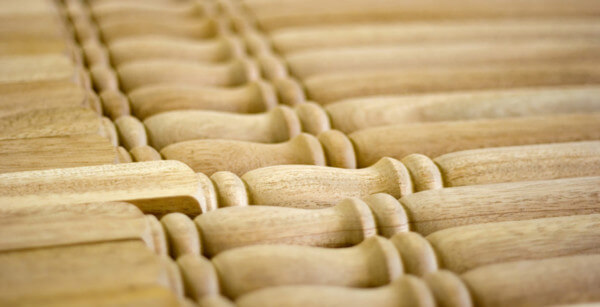
Turned Wood Balusters for Staircases, Railings, and Custom Installations
A baluster is the vertical post that supports a railing—seen here in custom-turned wood styles.
Balusters vs. Spindles – Is There a Difference?
While some people believe there’s a technical difference between the two terms, in most cases, they refer to the exact same component. “Baluster” is the preferred term in construction specifications and architectural language. “Spindle” is often used in casual conversation or certain regions.
Both terms appear in product catalogs, installation guides, and contractor specifications.
Note: “Ballister” and “balister” are common alternate spellings and refer to the same component.
Wood Balusters from H.A. Stiles
H.A. Stiles supplies turned wood balusters in standard profiles and custom dimensions for stair, railing, and balustrade applications. For project details, available styles, and specifications, visit the wood balusters page.
Frequently Asked Questions (FAQs) for Wood Balusters
- All
- What is a Baluster? – Definition & Terminology
- What is a Baluster? – Design & Safety
- What is a Baluster? – H.A. Stiles Services
- What is a Baluster? – Manufacturing & Installation
- What is a Baluster? – Materials & Wood Selection
Absolutely. We can replicate an existing profile from a physical sample, photo, or detailed measurements.
Yes! H.A. Stiles specializes in both custom and bulk manufacturing of wooden balusters. We serve homeowners, contractors, large-scale projects, and more.
Most building codes follow the “4-inch rule,” meaning a 4-inch sphere should not be able to pass between balusters. This standard helps ensure safety, especially for children. However, this varies by location, so always conduct proper research before completing an installation!
Replacing outdated or worn balusters can instantly improve the look of a staircase or porch. It can make it more modern or historically accurate, depending on the chosen style and goal.
Yes. DIY installation is possible with proper planning, but it’s also essential to follow local building codes and secure each baluster correctly for safety.
Standard balusters are turned using lathes. More complex or custom designs may be produced on CNC or duplicating lathes for precision and consistency.
Western red cedar is naturally weather-resistant and lightweight. Mahogany provides exceptional durability and rich coloring for outdoor use. There are other species commonly used as well. Contact a pro for more information!
Poplar is cost-effective and smooth to machine. Soft maple offers greater durability (about 40% harder than poplar), making it ideal for interiors that see a lot of use. Contact an expert for more information on the best potential fits for your needs.
They are essentially the same component. “Baluster” is often the preferred term in architectural and manufacturing contexts. “Spindle” is often used in casual conversation or in certain regions.
A baluster is the vertical post that supports the handrail of a staircase, porch, balcony, or deck. It closes the gap between the base and the railing, providing safety and style.