
How to Stain Architectural Wood Parts: Balusters, Columns, and Turned Profiles
Staining a flat board and staining a turned baluster are not the same job. Flat surfaces are forgiving. Architectural wood parts are not. Grooves collect excess stain. Profiles hide missed sections. End grain on newel post caps absorbs at a different rate than the shaft below it.
And when the part is going on a porch column or a staircase railing in plain sight, the result being patchy is not an option.
This guide is written for the specific challenge of finishing architectural wood parts: balusters, porch columns, newel posts, and custom turned profiles. Whether you are a homeowner doing a staircase renovation or a contractor finishing trim packages at scale, the techniques here address what generic staining guides skip.
H.A. Stiles supplies unfinished wood balusters, columns, newel posts, and turned parts to homeowners, builders, contractors, architects, and more. The guidance below reflects what actually works when finishing these specific components.
Before you start below, confirm whether your parts are paint grade or stain grade. If you haven’t decided yet, see our guide to the right wood finish for your project.
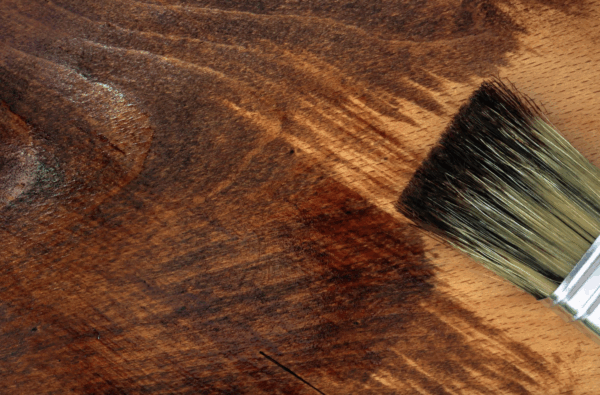
Applying Wood Stain with a Brush on Grain-Ready Surface
Brushing on wood stain brings out deep grain tones and color variation.
Why Architectural Wood Parts Require a Different Approach
Most staining guides are written with flat stock in mind: a tabletop, a deck board, a cabinet door.
Architectural parts introduce variables that change every step of the staining process. Turned profiles have grooves and coves that trap excess stain and dry unevenly if you wipe too late. End grain absorbs stain faster than face grain. On newel posts and column caps, this creates dark blotching if it’s not managed before you stain. Long vertical pieces like porch columns and balusters cause stain to run if you apply too much at once. Multiple profiles in a single run (a full baluster order or a staircase package) require batch consistency that single-piece finishing does not.
The approach below in this guide accounts for all of it.
What You Will Need
Before you start, gather the following. Having everything staged before you open the can prevents the most common staining mistakes.
- Sandpaper: 120 grit, 180 grit, 220 grit
- Tack cloth or damp lint-free rag
- Wood conditioner (required for pine, maple, and other blotch-prone species)
- Wood stain: oil-based for exterior parts and deep penetration; water-based for faster dry times and low-VOC environments
- Gel stain (for vertical surfaces and turned profiles, especially on large column orders)
- Foam brushes and natural bristle brushes
- Lint-free cloths for wiping
- Clear topcoat: polyurethane (oil-based for durability), lacquer, or water-based sealer
- Fine-grit sandpaper (320 grit) for between topcoat layers
- Gloves and adequate ventilation
Step 1: Prepare the Surface
Prep is where most finishing mistakes originate. Raw architectural parts from a supplier arrive sanded, but the level of prep you add before staining determines the final result.
Sand in Stages
Start with 120 grit to knock down any rough spots, mill marks, or raised grain. Move to 180 grit to smooth the surface, then finish with 220 grit. Always sand with the grain and not across it. Cross-grain scratches will read clearly under stain. On turned balusters and profiles, use folded sandpaper or sanding cord to follow the contours. A flat sanding block will skip the valleys and leave high spots overworked.
Handle End Grain Separately
End grain on newel post tops and column caps is porous and will absorb stain significantly faster than the rest of the piece. After sanding, pre-seal the end grain with a diluted coat of your topcoat or a dedicated end-grain sealer before you stain. This slows absorption and prevents the dark blotching that makes end grain look unfinished.
Remove All Dust
Wipe every surface with a tack cloth after final sanding. On turned profiles, run the cloth along the grooves and coves. Any dust left behind will show through the stain.
Step 2: Apply Wood Conditioner
Wood conditioner is not optional for blotch-prone species. If you are staining pine, maple, birch, or cherry and you skip the conditioner, you will see the consequences of skipping it on the finished piece.
Apply conditioner with a brush or cloth, working it into all surfaces including grooves and turned details. Let it soak for 10 to 15 minutes, then wipe off the excess. Apply your stain within two hours while the conditioner is still active.
For hardwoods like oak, walnut, and sapele, conditioner is less critical but still a useful tool if you are working in low humidity or with tight timelines that prevent thorough sanding.
- Species that always need conditioner: pine, maple, birch, cherry, alder.
- Species where conditioner helps but is not required: oak, ash, poplar.
- Species that rarely need conditioner: walnut, sapele, mahogany, teak.
Step 3: Apply Stain to Turned and Profiled Parts
This is the step where architectural staining diverges most sharply from staining flat stock. The sequence here matters.
Work the Grooves First
On wood balusters, newel posts, and any turned profile, start by working stain into the grooves, coves, and detail areas using a brush or folded cloth. Push the stain in and make sure the recessed areas are fully covered before moving to the surrounding surfaces. Do not wipe yet.
Coat the Full Surface
After the grooves are loaded, apply stain to the remaining surfaces following the direction of the grain. Work in manageable sections, 12 to 18 inches at a time on long pieces like columns and newel posts. Apply an even coat without flooding the surface.
Wipe in Sequence
Let the stain sit for 5 to 10 minutes (depending on the depth of color you want). Then wipe starting with the flat and straight surfaces, moving with the grain. Come back to the grooves last, wiping excess out of the recesses with a brush tip or the folded edge of a cloth.
If stain pools in a groove and dries before you wipe, it will be darker than the surrounding surface and difficult to correct. Work quickly on detailed profiles.
On Vertical Pieces: Use Gel Stain
For porch columns, tall newel posts, and any part finished in a standing position, gel stain is the right product to use here. Gel formulations do not run, they sit on the surface until you work them in. This gives you control on long vertical surfaces that liquid stain does not.
Apply gel stain with a brush, working top to bottom. Work it into grooves with a stiff bristle brush, then wipe with a cloth moving with the grain.
Step 4: Apply Topcoat
Stain alone does not protect the wood. On architectural parts that will see contact, weather, or traffic, a topcoat is not optional. This is the step that determines how long the finish lasts.
Choose the Right Topcoat for the Application
- Interior balusters and newel posts: Oil-based polyurethane for durability and depth of sheen. Two to three coats.
- Interior columns and decorative trim: Water-based polyurethane or lacquer for faster dry time and lower odor.
- Exterior porch columns and railings: Oil-based spar urethane or exterior-rated polyurethane. These are formulated to flex with temperature and humidity changes that interior finishes are not built for.
Apply in Thin Coats
Apply the first coat in the direction of the grain. On turned profiles, use a brush to work the topcoat into grooves, then smooth off the excess with long strokes along the grain. Thin coats dry faster, bond better, and build a more even surface than heavy applications.
After the first coat dries fully, sand lightly with 320 grit. This knocks down any raised grain or dust nibs. Wipe clean, then apply the second coat. Repeat for a third coat on high-contact or exterior applications.
Two to three coats is standard for interior architectural wood parts. Three to four for exterior applications in direct weather exposure.
Choosing the Right Stain by Wood Species
Not all wood takes stain the same way. The species you are finishing determines your prep requirements, stain choice, and what the final result will look like.
Below is a practical reference for the species most commonly used in architectural wood parts.
For a full breakdown of available species and how H.A. Stiles sources and supplies them, see our wood species selection guide.
Interior Applications
- Red Oak: This species takes stain well with minimal prep, since open grain accepts color easily. A medium-brown or walnut-toned stain brings out the ray fleck pattern that defines oak. No conditioner is needed.
- Hard Maple: Dense and blotch-prone. Always use a conditioner. Maple stains best in lighter tones; dark stains tend to look uneven on maple regardless of prep. If deep color is the goal, paint-grade finishing is worth considering.
- Poplar: Affordable and paintable, but stains inconsistently due to mineral streaking. Best used as a paint-grade species. If staining, condition thoroughly and expect some color variation.
- Cherry: Blotch-prone when raw. Use conditioner. Cherry also darkens significantly with UV exposure over time, so factor that into your stain color selection. Lighter stains that let the natural darkening work in your favor tend to age best.
- Walnut: One of the most rewarding species to stain. Rich grain, low blotching risk, excellent stain absorption. Takes dark and medium stains well. Grain filler before topcoat produces a glass-smooth result on walnut.
Exterior Applications
- Sapele: Interlocked grain produces a ribbon figure under stain that is visually distinctive. Excellent weather resistance. Takes oil-based stains and exterior finishes well. A common choice for porch columns and exterior balusters where appearance matters as much as durability.
- African Mahogany: Similar to sapele in weather resistance, slightly more uniform in grain. Accepts stain evenly. Works well with medium and dark brown tones.
- White Oak: Tyloses in the pore structure make white oak naturally water-resistant, which is why it is used in exterior architectural applications. Takes dark stains cleanly. No conditioner needed.
- Cedar: Lightweight and naturally rot-resistant. Takes stain, but tannins can interfere with adhesion. Use a stain-blocking primer or wood conditioner first. Best finished with a semi-transparent exterior stain rather than a film-forming topcoat.
Tips for Contractors Finishing at Scale
If you are finishing a full staircase package, a porch renovation, or a production run of balusters and columns, single-piece technique can break down at volume. These are the adjustments that matter.
Check moisture content before you start. Wood above 12% moisture will reject stain and cause adhesion failures later. Use a moisture meter on every batch. Don’t just a spot check on one piece.
Mix your stain cans. If you are working from multiple containers of the same stain, combine them in one bucket. Pigment settles and varies between cans. Mixing eliminates color inconsistencies across a full baluster run or column set.
Use spray application for high-volume runs. A detail gun speeds up stain application significantly on turned parts. Back-brush immediately after spraying to work stain into grooves and ensure even absorption. Do not spray and walk away.
Establish a wet edge on long pieces. On columns and newel posts over four feet, work in sections and maintain a wet edge between them. Lap marks on a column in a finished entryway are a problem that could have been prevented.
Batch your topcoat coats. Apply coat one across all pieces before returning to coat two. This keeps your workflow moving without waiting on individual pieces and helps maintain consistency across the full set.
Grain filler before topcoat on open-grain species. For walnut, mahogany, and sapele going into high-visibility locations, fill the grain with a paste wood filler before your final topcoat. The difference in surface smoothness is significant.
Common Problems and How to Fix Them
Blotchy Coverage
Cause: skipped conditioner on a blotch-prone species, or uneven sanding. Fix on raw wood: apply conditioner and restain. Fix on dried stain: lightly sand and apply a gel stain over the top, which will even out the coverage. Prevention is significantly easier than the fix.
Stain Pooling in Grooves
Cause: too much stain applied at once, or wiping flat surfaces before clearing the grooves. Fix: use a stiff brush or the folded edge of a cloth to pull the excess out of the groove before the stain sets. If it has already dried, sand the groove lightly with sanding cord and reapply.
Uneven Color Across a Set of Balusters
Cause: different stain sit times between pieces, multiple cans with pigment variation, or moisture content differences in the wood. Fix on uncured stain: restain the lighter pieces with a longer sit time. Prevention: mix cans, check moisture, and standardize your wipe timing across the full set.
Drips on Columns and Vertical Pieces
Cause: too much stain applied to a vertical surface, or not wiping fast enough. Fix: wipe immediately before the drip sets. Dried drips require light sanding and a touch-up coat. Prevention: switch to gel stain on all vertical pieces before the problem occurs.
Starting with the Right Wood Makes Finishing Easier
The staining process becomes significantly more predictable when the wood itself is consistent. H.A. Stiles supplies unfinished wood balusters, porch columns, newel posts, and custom turned parts that are milled to spec and available in stain-grade species selected for finishing performance.
- Parts arrive sanded and ready for your prep sequence, without mill marks or grain tearout to fight
- Stain-grade species are available for projects where a clear, even finish is the goal
- Custom profiles and reproduction work are available for restoration projects where matching existing components matters
- Unfinished parts allow you to match stain color on-site before committing to a full order
For exterior applications including porch columns and deck railings, sapele and African mahogany are available and specifically selected for weather resistance and finishing performance.
If you are working on a staircase renovation, porch project, or larger package and want to discuss species selection, part sizing, or finishing options before ordering, contact H.A. Stiles for a no-obligation quote!
For Projects That Include Deck or Exterior Railings: Stain or Paint?
If your project includes exterior railings, deck balusters, or porch components and you are deciding between stain and paint, the choice depends on species, exposure, and maintenance expectations. We cover the full comparison in this guide: Paint or Stain Your Deck? What to Know Before You Finish.
Final Notes
Staining architectural wood parts is not complicated, but it does not forgive skipped steps. Prep determines how stain absorbs. Species determines what prep you need. The sequence on turned profiles determines whether grooves look finished or sloppy.
Get those three things right and the result holds up, looks professional, and does not require correction work after installation.
Need stain-ready architectural wood parts? H.A. Stiles supplies unfinished balusters, columns, newel posts, and turned components to homeowners, contractors, and millwork shops. Contact us for a quote or to discuss species options for your next project.