
How to Improve a Staircase in a Craftsman Home
Improving a Craftsman style staircase usually starts with one problem: a part that doesn’t match. This could be a replacement newel that looks too ornate, a baluster that is the wrong thickness, or a new finish fighting the grain.
Craftsman design is built on simple geometry, so improving the staircase means working inside that language.
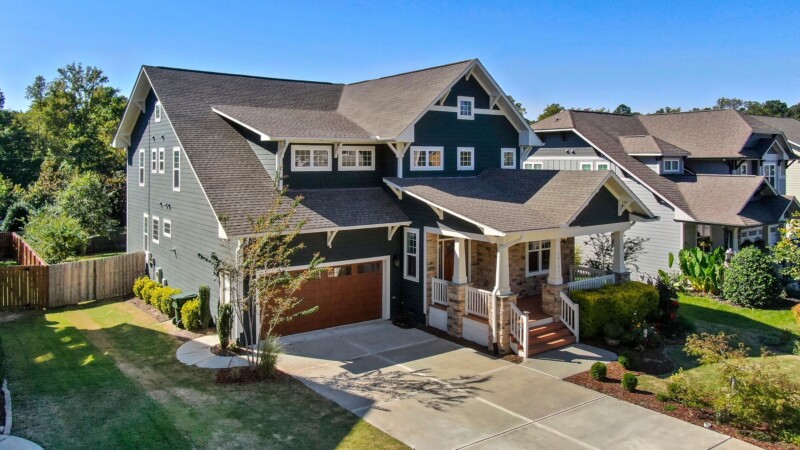
Modern Craftsman Style Home Exterior
A newly built home using classic Craftsman details: deep porches, tapered columns, and exposed roof brackets.
What Defines a Craftsman Staircase
The signature element in one of these staircases is the box newel. It’s a square post with a flat or recessed panel and a simple cap, often called a mission-style cap. This stands in direct contrast to the tall, turned newel posts found in Victorian homes. Square balusters are the standard companion piece, sometimes with a subtle taper, wider at the base and narrower near the handrail. Some Craftsman staircases group balusters in pairs or triplets with wider gaps between groups rather than spacing them evenly.
For the terms used in this guide, see the guide to staircase parts. This design language traces back to the Arts and Crafts movement of the early 1900s, which developed as a reaction against the mass produced goods of the Victorian era. The movement valued visible structure and individual design over catalog sameness, which is part of why an authentic Craftsman staircase still tends to look distinct from house to house rather than following one repeated template.
A newer variation of this style of staircase pairs a painted white skirt and risers with a stained tread and handrail for contrast, all within the same square-baluster, box-newel structure. This is a design update, not a separate style.
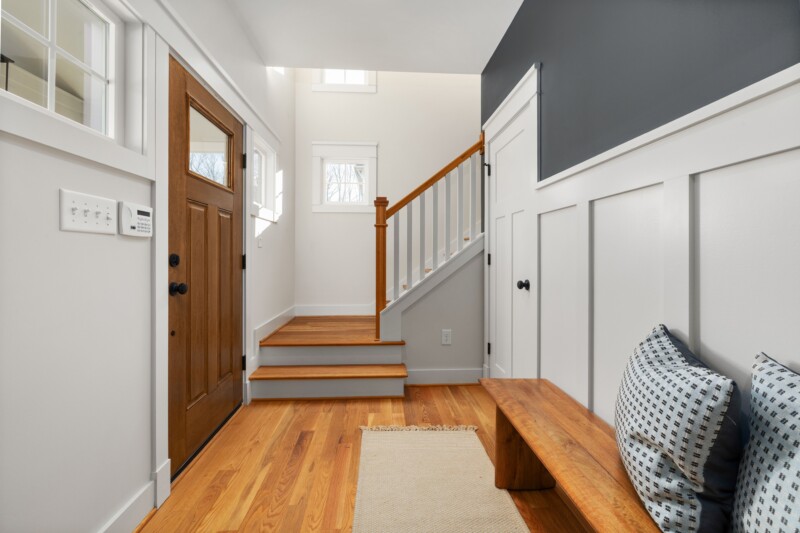
Craftsman Style Staircase with Square Newel Post
Painted risers and stained treads pair with a square newel post and straight balusters for a clean, contemporary Craftsman look.
Wood Species for a Craftsman Staircase
White oak is the species most closely tied to the style. Red oak is a common alternative with a similar open grain.
Poplar shows up in Craftsman box newels when the plan is a painted finish rather than a natural or stained one. Whatever the species, new parts should match the existing treads and handrail so the staircase reads as one piece. To see species options for a full staircase, see our wood species selection or custom wood balusters.
Common Problems in Craftsman Staircases
A few issues come up often in Craftsman renovations. Replacement balusters or newels ordered from a general home improvement catalog frequently don’t match the original square geometry, which throws off the whole line of the staircase even when the new parts are technically correct. Glossy modern finishes can also work against the style, since Craftsman design leans on a natural or matte look that lets the grain read clearly. And older staircases with grouped or widely spaced balusters may not meet current code. Most U.S. residential codes use a 4-inch sphere rule for baluster gaps, and local codes vary, so check before any replacement work begins.
Restore vs. Replace
If a box newel’s joinery is still solid and the only issue is a dated or damaged finish, refinishing usually makes more sense than replacing it. Replacement becomes the better option when a baluster profile is cracked, missing, or was discontinued by whoever originally supplied it. At that point, matching the original geometry is the priority rather than restoring what’s there.
If a profile is cracked, missing, or discontinued, a clear photo with measurements is enough for H.A. Stiles to start a quote.
Choosing Period-Appropriate Custom Components
Because Craftsman design was built around individual work rather than mass production, a generic stock baluster or newel rarely matches an original Craftsman staircase’s proportions. Matching square dimensions, panel depth, and cap style usually calls for a component built to the original’s specific measurements.
For a deeper look at how box newel styles read as Craftsman versus other periods, see the guide to newel posts.
Some Craftsman box newels include a boot, which is a wider flared base that adds weight at the bottom of a staircase. Others skip it for a more contemporary profile. This is a proportion decision that should match the rest of the staircase, which is one more reason a custom match beats a stock profile.
Working With a Supplier on Specs
The most reliable way to get an accurate match is sharing a physical sample or a clear photo with measurements of the original component. A supplier working from a sample can replicate a profile even when it’s long discontinued.
H.A. Stiles supplies custom newel posts, balusters, and other stair components matched to Craftsman proportions and species. Request a free quote to start the conversation today.
Frequently Asked Questions (FAQs) for Craftsman Staircases
Yes, significantly. Craftsman design favors geometric components, while Colonial staircases typically use more traditional profiles. See the guide to improving a Colonial staircase for that style specifically.
Yes. A supplier working from a physical sample or a photo with measurements can typically replicate a discontinued or damaged profile to match the rest of the staircase.
Most Craftsman staircases favor a natural or stained finish that shows the wood grain, in keeping with the style’s emphasis on visible materials. Painted finishes do appear, most often on poplar components, but a stained or clear finished hardwood is closer to the traditional look.
Several hardwoods work well for a Craftsman staircase. The right choice usually comes down to finish and budget. White oak is the species most closely tied to the style historically. Red oak offers a similar look at a lower cost, and poplar is a common choice for box newels headed for paint rather than a stained or natural finish.